
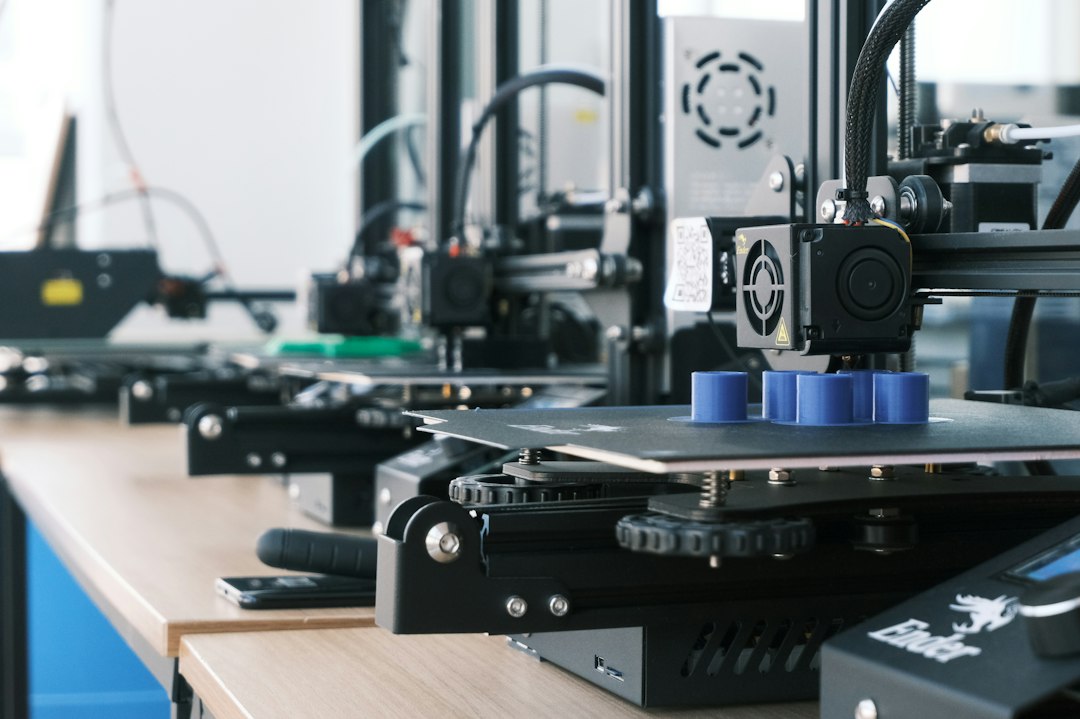
Wall thickness is one of the most important design and slicer decisions in FDM 3D printing. A part can have high infill and still fail if its outer structure is too thin. For functional prints, choosing the right number of walls often improves strength more efficiently than simply filling the entire interior with plastic.
What is wall thickness?
Wall thickness describes the thickness of the outer shell of a printed object. In a slicer this is commonly controlled by wall loops, perimeters or shell count. The actual thickness depends on extrusion width and nozzle size.
Why walls matter
- They carry loads around the outside of the component.
- They strengthen screw holes and mounting features.
- They improve impact resistance.
- They influence surface quality and dimensional stability.
- They can be more material-efficient than excessive infill.
Nozzle size and wall design
A model should be designed with the intended manufacturing process in mind. Very thin walls may not generate predictable toolpaths. With a common 0.4 mm nozzle, multiple perimeter lines are normally used for functional parts. Larger nozzles can create wider extrusion lines and can be useful for large, strong components.
Decorative versus functional prints
A display model that experiences little force can use a lighter shell. A bracket, enclosure, drone component, machine accessory or assembly part generally deserves more attention to wall thickness and local reinforcement.
Do more walls always mean more strength?
Additional walls can increase strength, but there is a point of diminishing returns. Geometry, material, layer adhesion and print orientation can become the limiting factors. The best solution is to understand where the load travels through the part.
Wall thickness around screw holes
Fastener locations often fail before the rest of the model. Give screw bosses enough surrounding material and consider fillets to distribute stress. Heat-set inserts and captive nuts also require enough plastic around the hardware.
Walls versus infill
For many practical prints, adding perimeters can provide more useful strength than jumping from moderate infill to extremely high infill. Infill still matters, especially for supporting top surfaces and transferring internal loads, but it should be considered together with the shell.
Material selection
PLA, PETG, ABS, ASA, nylon and other materials behave differently. A thick wall cannot compensate for choosing a material that is unsuitable for the operating temperature, flexibility requirement or environment.
Print orientation
FDM parts are anisotropic: strength can vary with direction. Orient a functional component so critical loads do not unnecessarily pull layers apart. Wall design and orientation should therefore be decided together.
Practical checklist
- Identify the expected load.
- Check nozzle and extrusion width.
- Use sufficient perimeters around critical features.
- Reinforce holes, bosses and corners.
- Use fillets where stress concentrates.
- Choose material for the real environment.
- Consider print orientation.
- Prototype and test important components.
Conclusion
There is no single perfect wall thickness for every 3D print. The correct choice depends on geometry, nozzle, material and application. Artin3D evaluates these factors when preparing functional client parts for production. Artin3D – Where ideas take shape.
Comments (3)