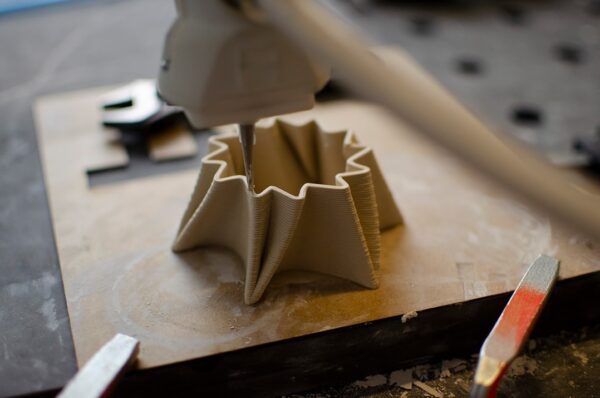
Layer height creates a familiar tradeoff in FDM printing: thin layers can improve detail but increase print time, while thick layers print faster but make curves and slopes more visibly stepped. Adaptive layer height attempts to combine the advantages of both by changing layer thickness across different regions of the same model.
What is adaptive layer height?
Also called variable layer height, the technique uses thinner layers where geometry benefits from additional vertical resolution and thicker layers where the shape is simple.
Why curved surfaces benefit
Shallow slopes and domes reveal the staircase effect more clearly than vertical walls. Reducing layer height in those areas can create smoother transitions without forcing every millimeter of the object to print at the finest setting.
Where thicker layers make sense
- Vertical walls
- Simple internal regions
- Areas without fine Z-axis detail
- Large sections where speed matters more than appearance
Where thinner layers help
- Domes
- Sloped roofs
- Organic shapes
- Small vertical details
- Visible curved surfaces
Does adaptive layer height always save time?
Not automatically. It saves time compared with printing the entire model at the smallest layer height, but it may still take longer than using a coarse fixed height everywhere. The goal is a better quality-to-time balance.
Nozzle size still sets practical limits
Layer height should remain within a sensible range for the installed nozzle and extrusion system. Extremely thin or thick values can reduce reliability even when the slicer allows them.
Mechanical parts
Variable layers can be useful for functional components with curved external surfaces, but dimensional accuracy and strength remain more important than appearance. Validate critical features rather than assuming a visually smoother surface is mechanically superior.
Miniatures and display models
For larger FDM figures and display pieces, adaptive layers can improve faces, helmets, domes and other curves while keeping simpler sections efficient.
When fixed layer height is better
A consistent layer height can simplify process control for repeat production and dimensional testing. If a component is already optimized at one setting, variable layers may add unnecessary complexity.
Practical workflow
- Slice at a normal fixed height.
- Inspect the estimated time and visible slopes.
- Enable adaptive layers.
- Assign finer layers only where useful.
- Preview every layer transition.
- Check estimated time again.
- Run a test if the component is critical.
Conclusion
Adaptive layer height is valuable when a model contains both simple geometry and detailed slopes. Used carefully, it can provide a better balance of surface quality and production time. Artin3D – Where ideas take shape.