Choosing a filament can be confusing because every material seems to come with a long list of advantages. PLA is easy to print. PETG is tough. ABS is established in engineering applications. TPU bends. So which one should you actually choose?
The answer depends on what your part needs to do. This PLA vs PETG vs ABS vs TPU guide focuses on practical selection rather than declaring one material the winner.
Start With the Application, Not the Material Name
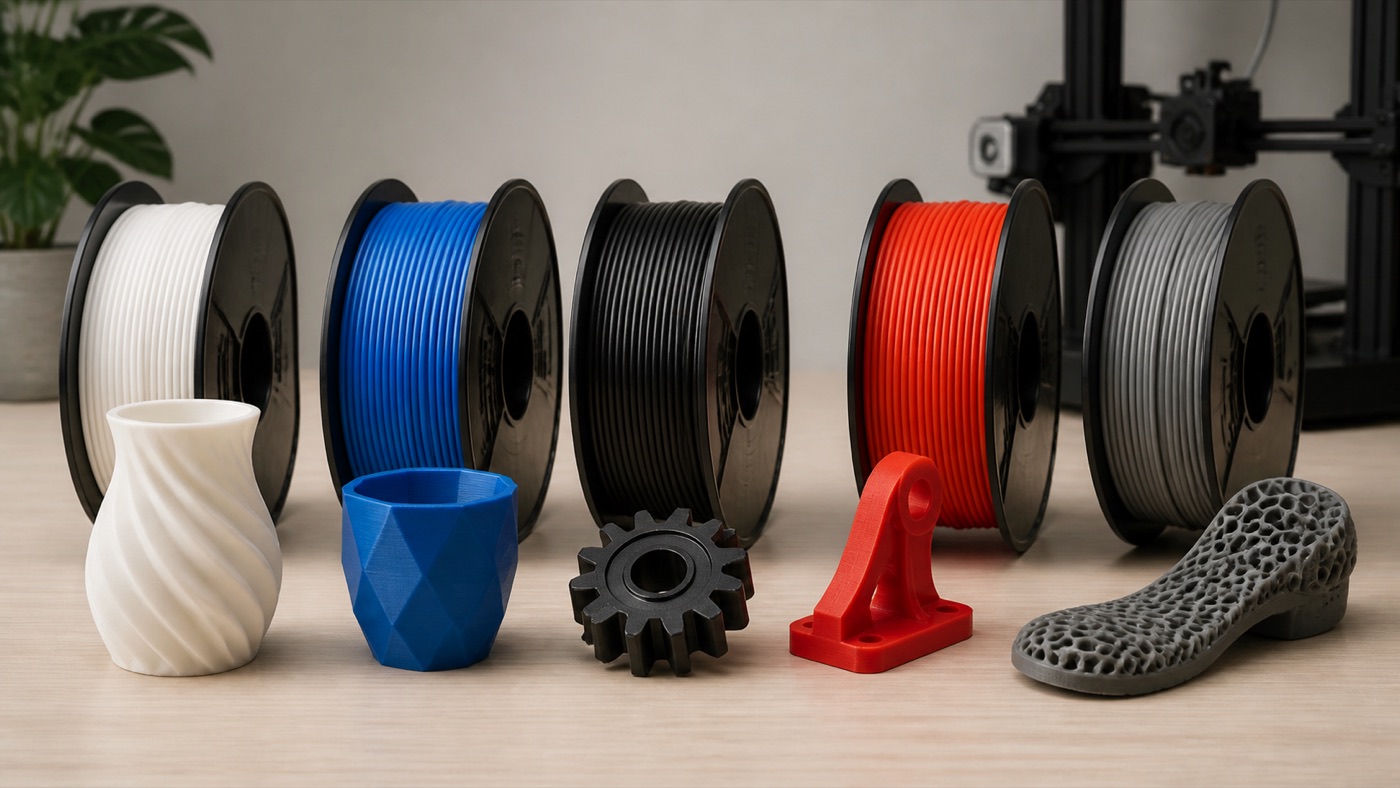
Before comparing technical properties, ask a few basic questions. Is the part decorative or functional? Will it be exposed to heat? Does it need to flex? Will it stay outdoors? Does it need to hold screws or survive impact? How important is surface appearance?
A material that is perfect for a desk model may be a poor choice for a part left in a hot environment. Likewise, using a difficult engineering filament for a simple indoor display can add complexity without providing useful benefit.
PLA: The Accessible All-Round Starting Point
PLA is one of the most widely recognized FDM materials. It prints relatively easily, produces good detail and is available in many colors. These characteristics make it excellent for visual prototypes, educational models, decorative objects, figurines, organizers and many general-purpose prints.
PLA is also useful during early product development when the main goal is checking shape, size and assembly rather than testing a demanding environment.
When PLA Makes Sense
Choose PLA when you want a clean prototype, a display item or an indoor product that does not need significant flexibility or elevated-temperature performance. It is also a sensible choice for many first iterations because reliable printing helps you evaluate the design quickly.
When PLA May Not Be Ideal
If a part will experience significant heat, repeated impact or demanding outdoor conditions, another material may be more appropriate. The exact answer depends on geometry and environment, so avoid making a material decision from one property alone.
PETG: A Popular Functional Choice
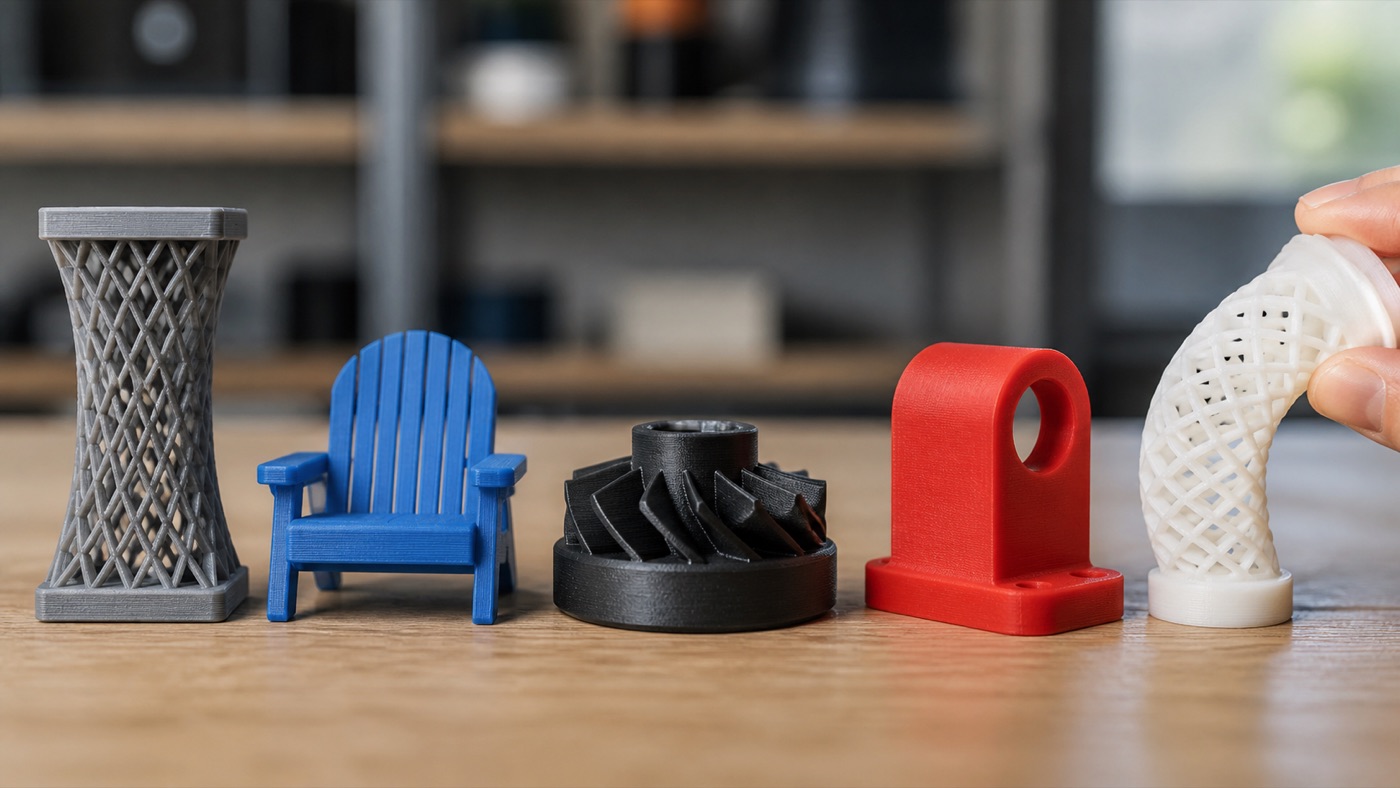
PETG is often selected when a project needs a useful balance between toughness and practical printability. It is common for functional enclosures, brackets, holders, mechanical prototypes and products that need more resilience than a basic visual model.
PETG can be a good middle ground when PLA feels too limited but the project does not justify moving to a more demanding material.
PETG Design Considerations
Good results still depend on correct printer settings and part design. Stringing, bridging and surface finish can behave differently from PLA. For functional work, orientation and wall structure remain just as important as the material itself.
ABS: An Established Engineering Plastic
ABS has a long history in manufactured plastic products. In FDM printing, it can be useful for functional parts that benefit from its particular combination of properties. However, it generally requires more controlled printing conditions than PLA.
Temperature management and warping are important considerations. An enclosed, properly configured printer is often preferable for reliable ABS production, especially on larger parts.
When to Consider ABS
Consider ABS when its performance characteristics match the application and your printing setup can handle it reliably. Material selection should also account for the environment where printing takes place and appropriate ventilation practices.
TPU: When the Part Needs to Flex
TPU belongs to a completely different category of use. Instead of making a rigid object, TPU allows parts to bend and compress. This makes it valuable for protective components, flexible covers, grips, bumpers, feet, straps and certain wearable or vibration-related products.
TPU is available in different hardness levels, so “TPU” does not describe one identical behavior across every spool. A softer grade can feel very different from a harder one.
Printing Flexible Filament
Flexible material can require slower, carefully tuned printing. Extrusion path, retraction, speed and temperature all matter. A model designed for rigid PLA may also need geometry changes when converted to a flexible product.
PLA vs PETG: Which Should You Pick?
For a visual prototype or simple indoor object, PLA is often the easiest choice. For a functional bracket, enclosure or product that needs additional toughness, PETG may be worth considering. But geometry can change the answer: a well-designed PLA part may outperform a poorly designed PETG part in a specific test.
PETG vs ABS
PETG is attractive when you want practical functional printing without some of the challenges associated with ABS. ABS can still be valuable when its specific characteristics suit the application and controlled printing is available.
Rigid Materials vs TPU
This comparison is simpler. If the product must remain rigid and hold its shape under normal use, PLA, PETG or ABS may be appropriate. If the product is supposed to flex, compress or act like a soft protective component, TPU becomes a candidate.
Material Is Only Half the Story
A common mistake is believing that buying a “strong” filament automatically produces a strong part. Layer orientation, wall count, infill, sharp corners, holes and load direction can be equally important.
Imagine a bracket printed so its layers separate directly under the main load. Changing the orientation may improve performance more than switching materials. Good engineering combines material selection with design for additive manufacturing.
What About Appearance?
Color and finish matter for consumer products. PLA is available in a huge range of visual styles. PETG can have its own characteristic finish. TPU provides a rubber-like feel. Layer height and nozzle size also influence how visible the layer lines are.
How to Choose for Your Next Project
Tell your printing service what the object will actually experience: load, heat, sunlight, water, impact, bending and assembly. Also explain whether your priority is appearance, cost, speed or durability.
At Artin3D, material selection is considered as part of the complete printing requirement. We provide custom FDM printing and can discuss an appropriate material based on your project rather than choosing one blindly.
Artin3D – Where ideas take shape.