If you are planning to order a custom 3D print in Bangladesh, one of the first questions is usually: how much will it cost? There is no single fixed price that works for every model because 3D printing is a manufacturing process, not a standard off-the-shelf product. Two objects with the same height can have very different material use, printing time, support requirements and finishing work.
This guide explains the main factors that influence a custom 3D printing quotation in Bangladesh so you can prepare your file, choose the right material and reduce unnecessary cost without sacrificing the function of the part.
Why 3D printing does not have one fixed price
A service provider normally needs to inspect the actual 3D model before giving an accurate quotation. The slicer calculates the toolpath and provides information about estimated material consumption and machine time. Design work, post-processing and assembly may then be added depending on the project.
The biggest quotation factors normally include:
- Overall dimensions of the model.
- Material type.
- Actual material consumption.
- Printing technology such as FDM or SLA.
- Layer height and quality target.
- Infill percentage and wall count.
- Support material.
- Total machine time.
- Number of pieces.
- CAD or 3D-modeling work.
- Post-processing and assembly.
- Failure risk for difficult geometry.
Model size matters, but weight matters too
A common mistake is assuming that a 20 cm object must cost twice as much as a 10 cm object. Three-dimensional scaling does not work that way. A larger object can require substantially more material, but a hollow display model may still consume less plastic than a smaller dense mechanical component.
For this reason, a useful quote usually comes from slicing the actual STL, STEP or other model rather than calculating from height alone.
Material selection changes the quotation
Different filaments and resins have different purchase prices and processing requirements. The cheapest material is not automatically the best choice if the finished part will be exposed to heat, impact, sunlight or repeated bending.
PLA
PLA is widely used for prototypes, decorative items, models and many indoor applications. It is comparatively easy to print and can be an efficient choice when extreme heat resistance or flexibility is not required.
PETG
PETG is popular for functional parts because it combines useful toughness with relatively straightforward printing. It is often considered for brackets, enclosures and products that need more practical durability than a basic display model.
ABS and ASA
These materials can be appropriate for applications requiring better temperature performance. ASA is also commonly considered when UV exposure matters. They generally demand more controlled printing conditions than PLA.
TPU
TPU is flexible and useful for grips, protective parts, vibration-related components and other applications where the object needs to bend. Printing flexible filament can be slower, which can influence production cost.
Resin
SLA or resin printing is useful when fine detail is important, particularly for miniatures, display models and small detailed components. Resin production also involves washing, curing and support removal, so the quote should consider the complete workflow rather than liquid resin consumption alone.
Print time is a major cost factor
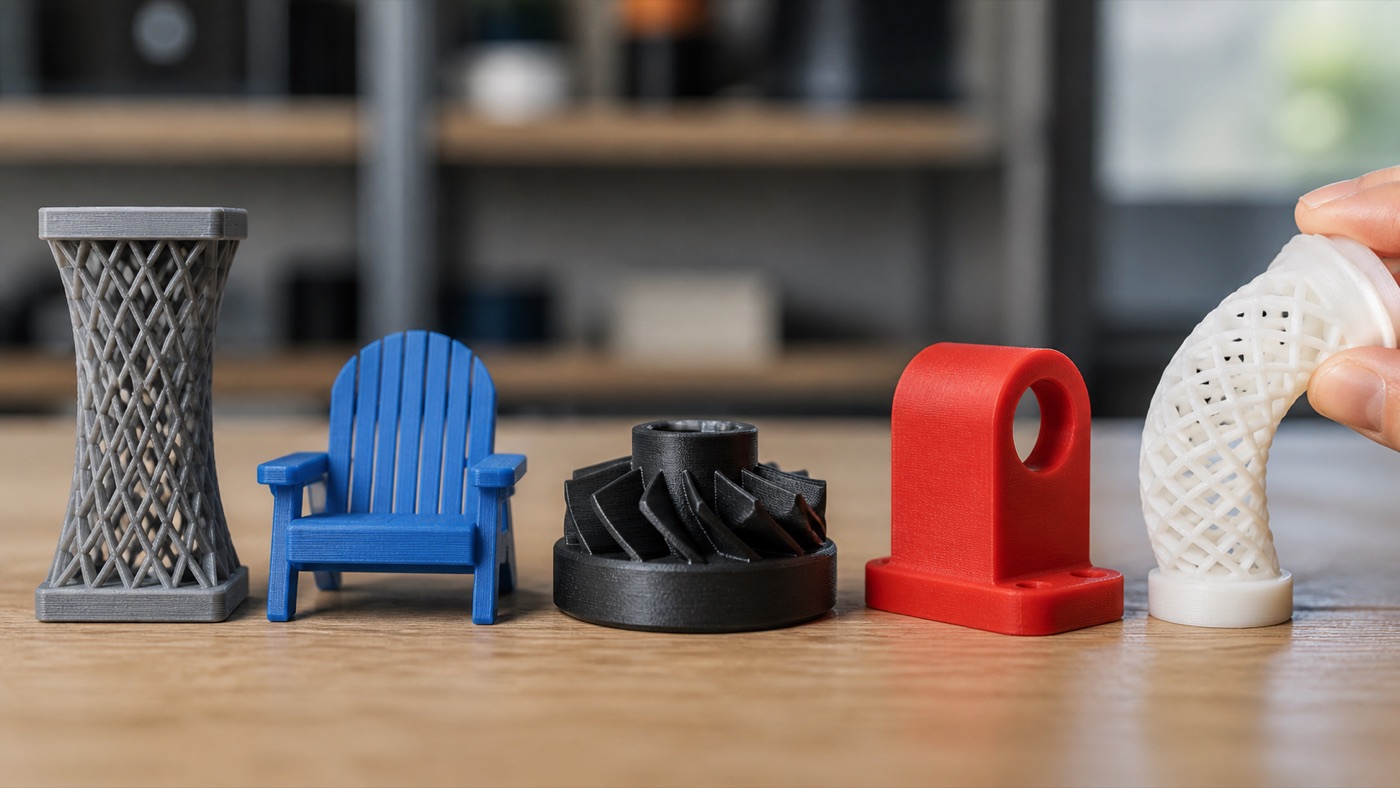
A printer occupied for many hours cannot produce another client job at the same time. Long prints also consume electricity and increase operational exposure to failed layers, filament issues or other interruptions. This is why two parts using similar grams of filament may receive different quotations if one takes much longer to print.
Print time is affected by:
- Layer height.
- Nozzle diameter.
- Part orientation.
- Travel distance.
- Support structures.
- Number of walls.
- Infill density.
- Print speed suitable for the material.
- Number of color or material changes.
Layer height: quality versus production time
Smaller layer heights can reveal finer vertical detail and reduce the stair-step appearance on slopes, but they also create more layers. More layers generally mean more machine time. For many functional FDM parts, a standard layer height may provide a better cost-to-performance balance than an unnecessarily fine setting.
High-detail models should use fine layers where the improvement is visible and valuable. Large structural objects can often use thicker layers to shorten production time.
Infill percentage is not the same as strength
Clients sometimes request 100% infill because they assume it is the only way to make a strong print. In many applications, increasing wall thickness and choosing a suitable orientation can be more efficient than filling the entire interior with plastic.
Common goals might be approached differently:
- Display model: low infill may be sufficient.
- General functional part: moderate infill with appropriate walls can work well.
- Highly loaded component: geometry, material, orientation and walls should be evaluated together.
- Heavy desk object: higher infill may be intentionally used to add weight.
The right setting depends on the load case rather than a universal percentage.
Support material can increase cost
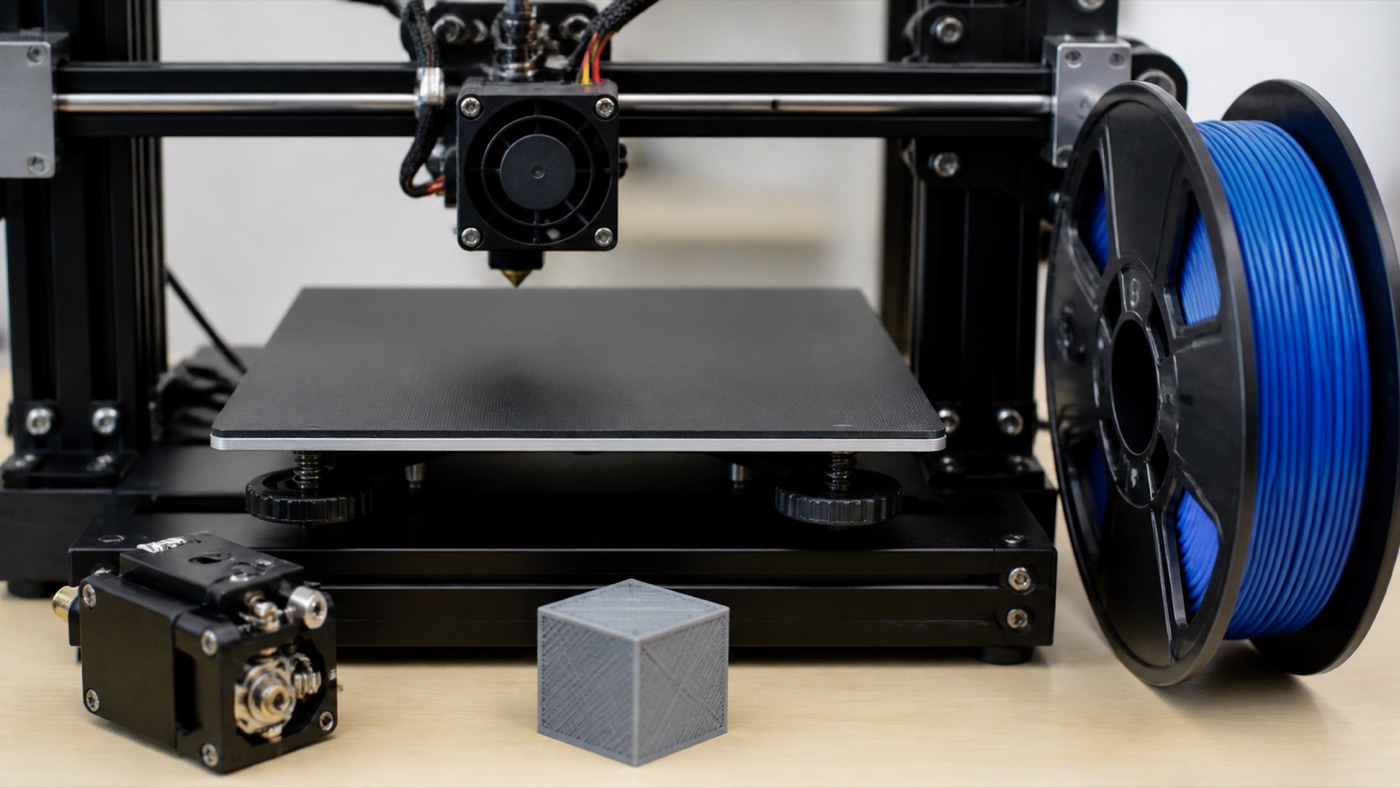
Overhangs and complex geometry may require supports. Those structures consume additional material and machine time, and removing them can require manual labor. They can also affect the surface finish where they touch the model.
A model designed specifically for additive manufacturing can sometimes be rotated, split or redesigned to reduce support. That can improve quality and lower waste at the same time.
FDM versus SLA pricing
FDM and SLA should not be compared only by price per gram because their workflows are different. FDM builds the object from filament. SLA cures liquid resin and requires additional cleaning and curing operations.
FDM is frequently selected for:
- Functional prototypes.
- Electronic enclosures.
- Large models.
- Brackets and holders.
- Robotics components.
- Drone and RC prototypes.
- Low-volume practical products.
SLA is frequently selected for:
- Miniatures.
- Highly detailed display models.
- Small visual prototypes.
- Fine surface features.
- Master models for suitable downstream processes.
Do you already have a printable file?
If the client supplies a clean, correctly sized and printable STL or STEP file, the project may move directly to review and slicing. If only an idea, sketch, photo, PCB or physical component is available, 3D-modeling work may be required before printing.
Design cost can depend on:
- Complexity of the geometry.
- Number of mating components.
- Required dimensional accuracy.
- Number of revisions.
- Whether reverse engineering is needed.
- Whether a prototype must be tested and adjusted.
Why custom enclosure projects can cost more
An enclosure for a PCB, camera or sensor is not simply a box. A usable design may need mounting posts, screw bosses, connector cutouts, ventilation, cable paths, tolerances and assembly features. The design stage can therefore represent a meaningful part of the project value.
Providing the real electronics or accurate CAD dimensions can reduce uncertainty and help the designer create the enclosure correctly.
Post-processing adds labor
A print straight from the machine may already be suitable for a functional prototype, but visual products sometimes require extra finishing. These steps should be considered separately because they can require significant manual time.
Examples include:
- Support removal.
- Sanding.
- Filling seams.
- Primer.
- Painting.
- Polishing where appropriate.
- Installing magnets, bearings or threaded inserts.
- Gluing multi-part models.
- Final assembly.
Quantity can change the per-piece cost
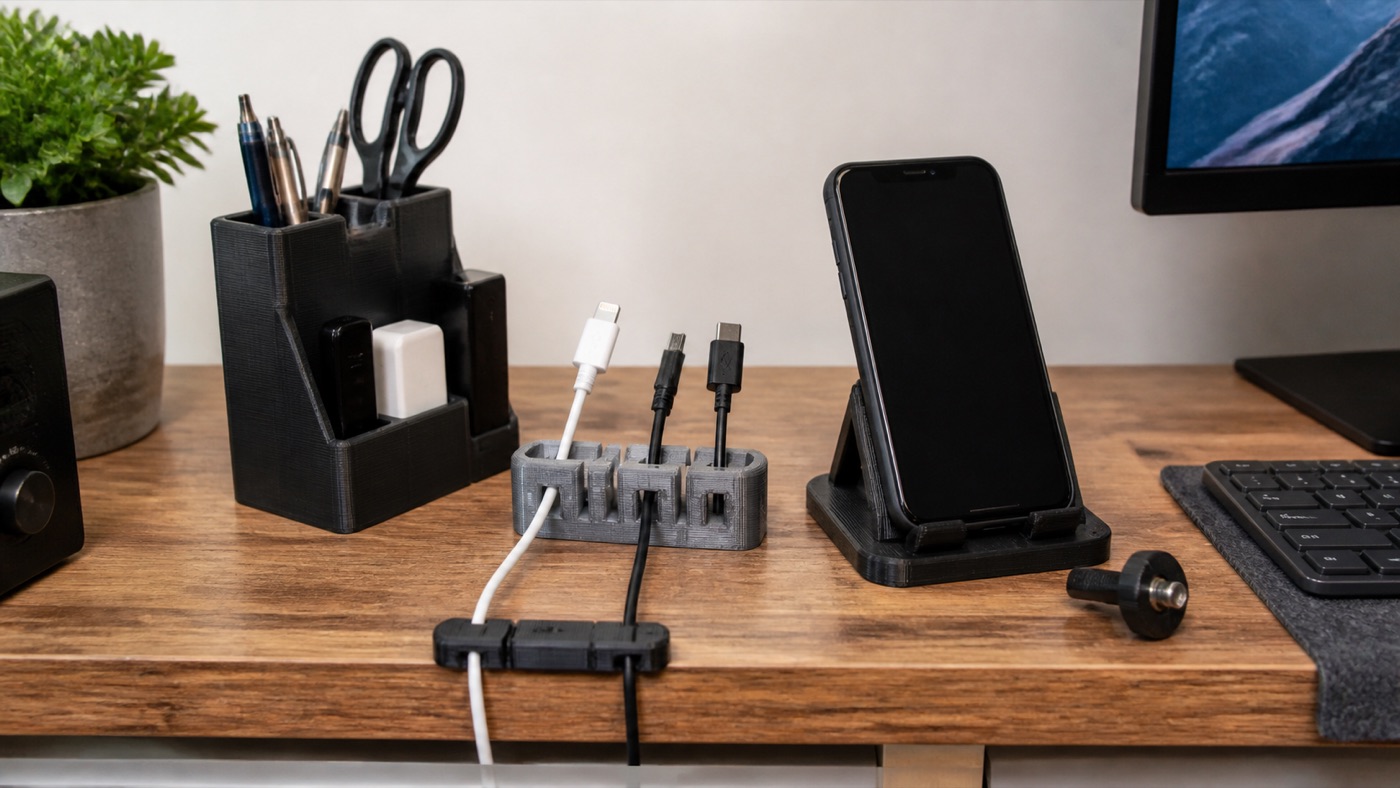
One prototype and fifty identical pieces have different production economics. Design and setup work can be distributed across more units, and multiple parts may fit on a build plate. However, 3D printing still consumes machine time for every batch, so quantity discounts do not behave exactly like injection molding.
For larger quantities, compare the total production requirement rather than assuming that additive manufacturing will always be cheapest. 3D printing is especially valuable when tooling cost, customization, frequent design changes or relatively low volumes make traditional tooling unattractive.
How to reduce your custom 3D printing cost
You can often reduce the quotation without making the part useless. The best savings come from eliminating unnecessary production requirements.
- Provide the correct final dimensions from the beginning.
- Send a clean STL or STEP file if you already have one.
- Avoid unnecessarily high infill.
- Use fine layer heights only when the detail needs them.
- Design parts to minimize support.
- Choose material based on actual requirements.
- Combine identical pieces into a planned batch.
- Avoid cosmetic finishing when a functional finish is acceptable.
- Prototype one unit before ordering quantity.
- Clearly explain where the part will be used.
What information should you send for a quotation?
A good project brief makes quotation faster and more accurate. Send as much of the following as possible:
- STL, STEP, OBJ or other available 3D file.
- Required dimensions.
- Quantity.
- Preferred material if known.
- Required color.
- Whether the object is decorative or functional.
- Heat, outdoor, impact or flexibility requirements.
- Desired deadline.
- Reference photographs.
- Any components the print must fit.
- Finishing or assembly requirements.
Why a photo alone may not be enough for a quote
A photo can help identify the type of object, but it usually does not show wall thickness, internal geometry or exact dimensions. If the 3D file does not exist, the provider may first need to estimate the design work. For an accurate production quote, a printable model is normally much more useful.
Prototype first when fit matters
For a component that must fit a device, bearing, motor, PCB or existing machine, start with a test print. The first unit can reveal tolerance or assembly issues. Correcting the CAD model before a larger batch is much cheaper than discovering a fit problem after every unit has been printed.
Cheap printing versus the right printing
The lowest quotation is not automatically the lowest total cost. A part printed in the wrong orientation or unsuitable material may fail and need to be produced again. Likewise, paying for extremely fine settings on a hidden functional bracket may add cost without adding useful value.
A sensible quote balances:
- Function.
- Appearance.
- Durability.
- Accuracy.
- Production time.
- Material choice.
- Budget.
Custom 3D printing in Bangladesh: a practical quotation workflow
A professional workflow can be summarized as follows:
- Send the model, photo or project requirement.
- Confirm dimensions and quantity.
- Choose a suitable printing technology and material.
- Review the model for printability.
- Slice it to estimate material and machine time.
- Add design or finishing work when required.
- Confirm the quotation.
- Produce a prototype when necessary.
- Print the final quantity.
- Inspect and prepare the parts for delivery.
Frequently asked questions
Is 3D printing charged only by gram?
Not necessarily. Material weight is only one part of production. Machine time, complexity, supports, design and finishing can all affect the final quotation.
Can I get a price from only a photo?
A rough estimate may sometimes be possible, but a final quotation is easier after dimensions and printable geometry are available.
Does 100% infill always make sense?
No. Many parts can achieve their intended performance using appropriate walls, orientation, geometry and a lower infill percentage.
Is resin always more expensive than FDM?
The answer depends on model size, detail, material, post-processing and production requirements. Choose the technology according to the result you need rather than assuming one process is universally cheaper.
Can a custom design be included with printing?
Yes, when a service offers CAD or custom design. The design requirement should be evaluated separately from the physical print so the scope is clear.
Conclusion
The real cost of custom 3D printing in Bangladesh is determined by the complete production requirement—not simply the height of the model or grams of filament. Material, machine time, supports, layer height, design work, finishing and quantity all contribute to the final quote.
For the most useful quotation, send Artin3D your 3D file or clear reference, final dimensions, quantity and application. If you only have an idea or physical component, the project can first be evaluated for custom modeling or reverse engineering before production. Artin3D – Where ideas take shape.
Get a quote for your own model
For a fitted part, tell us which surfaces must line up and give their dimensions in millimetres. For a display model, tell us the finished height and which details should remain visible. Include the quantity so we can quote the job at the scale you need.
Compare FDM and resin material options or upload your model for a custom printing quote.

Comment (1)