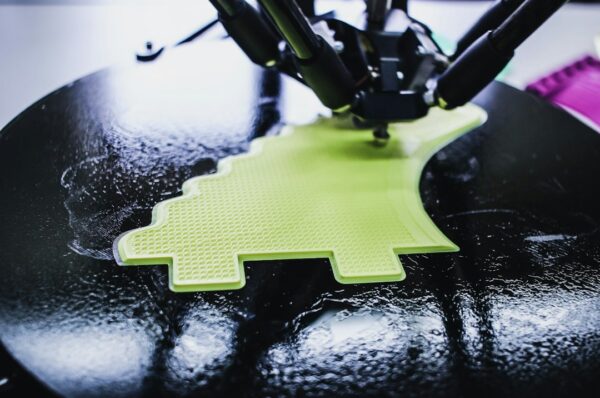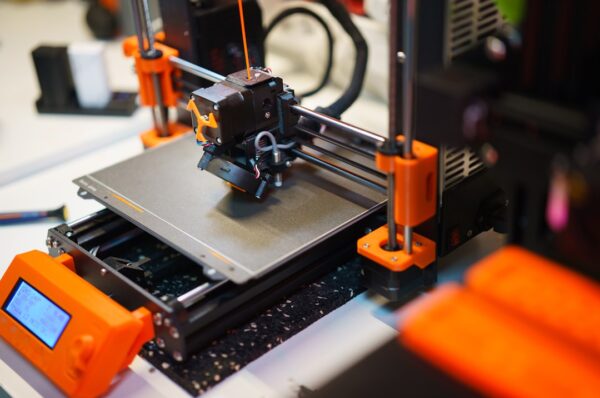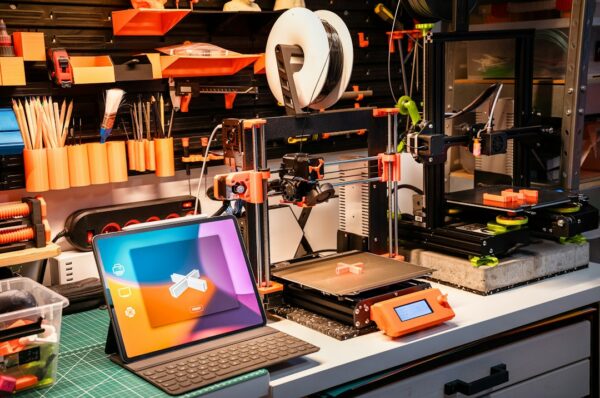
Improve FDM overhang quality with better cooling, layer height, speed, temperature, orientation and support strategy.
Sep 12
Improve FDM overhang quality with better cooling, layer height, speed, temperature, orientation and support strategy.
Understand why 3D printer nozzles clog and how to prevent heat creep, debris, burnt filament and extrusion problems.
Learn why 3D prints develop shifted layers and how to fix belt, pulley, speed, acceleration and mechanical problems.
Learn how bridging works in FDM 3D printing and how speed, cooling, temperature, flow and design affect unsupported spans.
Learn what causes elephant’s foot in FDM 3D printing and how bed temperature, first-layer settings, Z offset and model design…
Learn what causes the Z-seam in FDM 3D printing and how seam position, retraction, pressure control and model orientation can…
Understand 3D printer flow rate, how incorrect extrusion appears, and how to troubleshoot over-extrusion and under-extrusion.
Learn how 3D printing speed affects surface quality, strength, dimensional accuracy, cooling and overall print reliability.
Learn how adaptive or variable layer height can improve curved surfaces while keeping faster layers on simple geometry.
Learn what ironing does in FDM 3D printing, when to use it, its limitations and how it can improve visible…