
অন্য প্রিন্টারে নিলে সেই মেশিনের প্রোফাইল দিয়ে নতুন করে স্লাইস করুন। বড় ব্যাচ চালানোর আগে একই নমুনার ফিট ও দৃশ্যমান ফিনিশ মিলিয়ে নিন।
A second printer becomes available halfway through a multi plate order. Moving one plate to it could shorten the queue, but the part must still fit and look like those already accepted. Treat the move as a transfer between machines, even when the printers share a manufacturer. Start from the editable project, identify what must match and make a physical sample before sending the remaining production quantity.
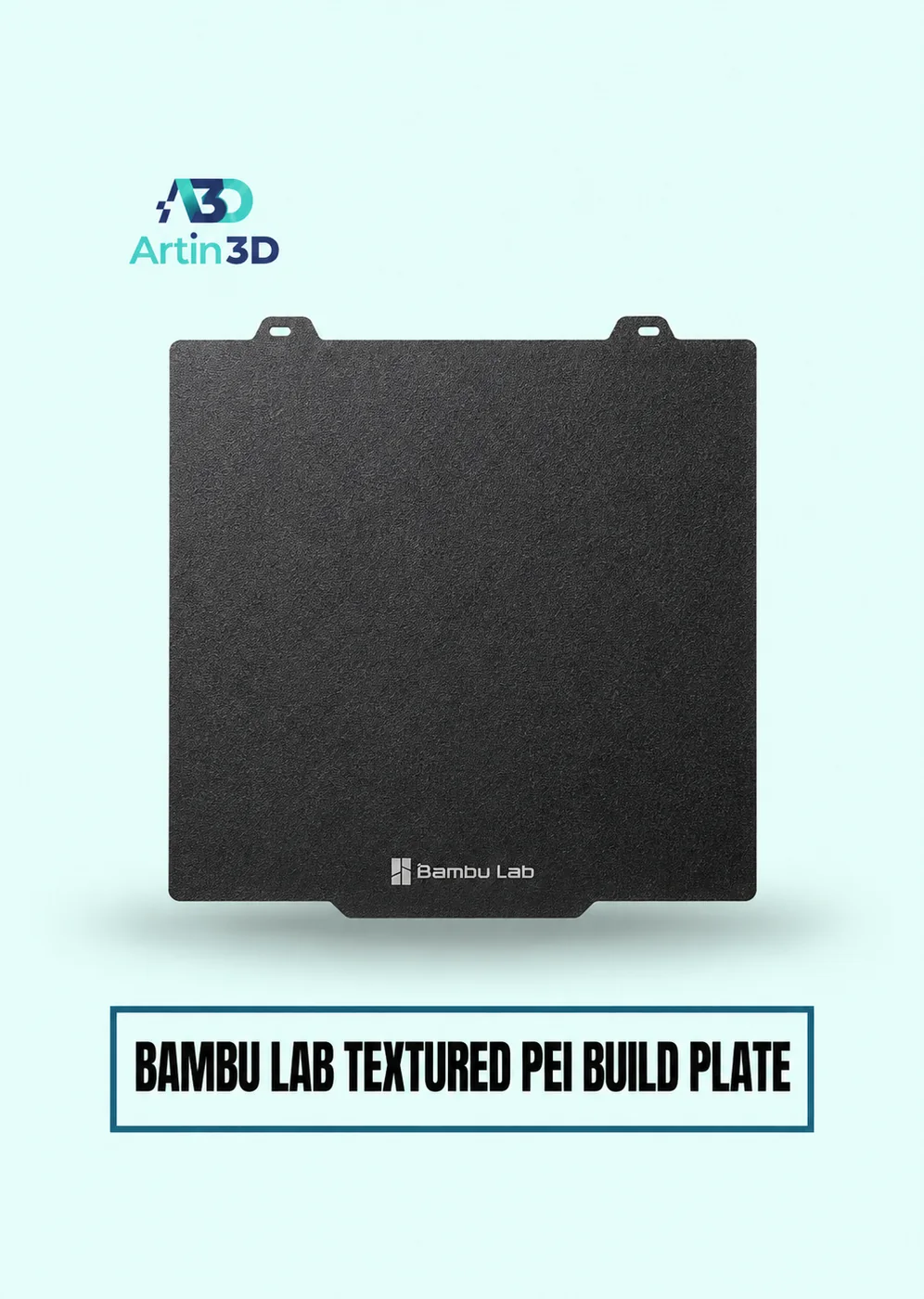
View Product · Bambu Lab Textured PEI
Check machine and accessory compatibility separately
Write down both printer models, nozzle sizes, available build area and intended material. Verify the build plate variant for the receiving machine. A Bambu Lab textured PEI sheet sold in one size cannot be assumed suitable for another machine simply because both use a textured surface. Keep the physical plate with the printer for which it is approved. The project geometry can travel without moving incompatible hardware.
Reopen the editable source
Select the correct receiving printer and its approved surface and filament profiles. Review the object layout after making that selection. Check travel limits, auxiliary structures, supports and the complete first layer. Generate a fresh machine file for that printer. An exported file prepared for the original machine can contain movements, temperatures or commands intended for its own configuration and should not be treated as a portable model.
Choose a transfer sample with two jobs
Pick a piece that captures both the most important fit and the visible finish. If those features belong to different products, print a small sample of each. Keep an accepted piece from the original machine as a reference. Mark the originals and samples on their backs or in their trays. It is easy to lose the comparison if all the parts are placed together before anyone measures them.
Measure in the intended assembly
Fit a part from the second printer against the same mating reference used for the first machine. Check the seating, motion or clearance the customer depends on. Then place the visible faces side by side in the intended lighting. If the fit passes and the appearance differs, investigate the spool, surface and orientation before modifying dimensions. A dimension change cannot correct a texture mismatch.
Decide which plates can move
Hidden internal spacers may tolerate an appearance difference, while a pair of adjacent display faces may require closer matching. Review the customer specification before reallocating them. Suppose a set needs two matching fronts and four hidden clips. One practical arrangement is to keep both fronts on the previously approved printer and transfer the clips after their fit test passes. The fastest schedule still has to deliver usable complete sets.
Make the transfer reversible
Keep a project version for each machine and record which physical orders came from each run. Note nozzle, surface, profile revision and sample approval. If another transfer fails later, the original approved layout remains available. When both machines have passed for a particular part, that record becomes a genuine scheduling benefit. The operator can select either documented route without assuming that every object in the wider project is equally interchangeable.
আরও পড়ুন CAD বদলালে কোন প্লেটগুলো আবার স্লাইস করতে হবে
Artin3D | Where Ideas Take Shape.
WhatsApp or Call +880 1845 348757
www.artin3dbd.com
South Banasree Dhaka 1219